12 Things to Know Before Buying Property in Cyprus
Updated for 2026
Buying property in Cyprus can be the start of an exciting new chapter. The island offers warm weather, attractive coastlines, traditional villages, modern cities and a relaxed outdoor lifestyle that appeals to permanent residents, retirees and holiday-home owners.
However, enjoying Cyprus on holiday is very different from owning a home here.
A beautiful sea view or private swimming pool may catch your attention, but a sensible purchase also depends on location, legal ownership, title deeds, planning permission, construction quality, buying costs and ongoing maintenance.
This guide explains 12 important things to know before buying property in Cyprus. It will help you ask the right questions, recognise possible problems and make a more informed decision.
Important: This guide provides general information and should not replace independent legal, financial or tax advice.
1. Choose the Part of Cyprus That Suits Your Real Lifestyle
Cyprus is a relatively small island, but its cities and districts offer very different lifestyles. A location that feels perfect during a two-week summer holiday may not suit you throughout the year.
Before viewing properties, think honestly about how you plan to use the home. Consider whether you prefer a busy city or a quiet village, whether you need easy airport access and whether you want restaurants and shops nearby throughout winter.
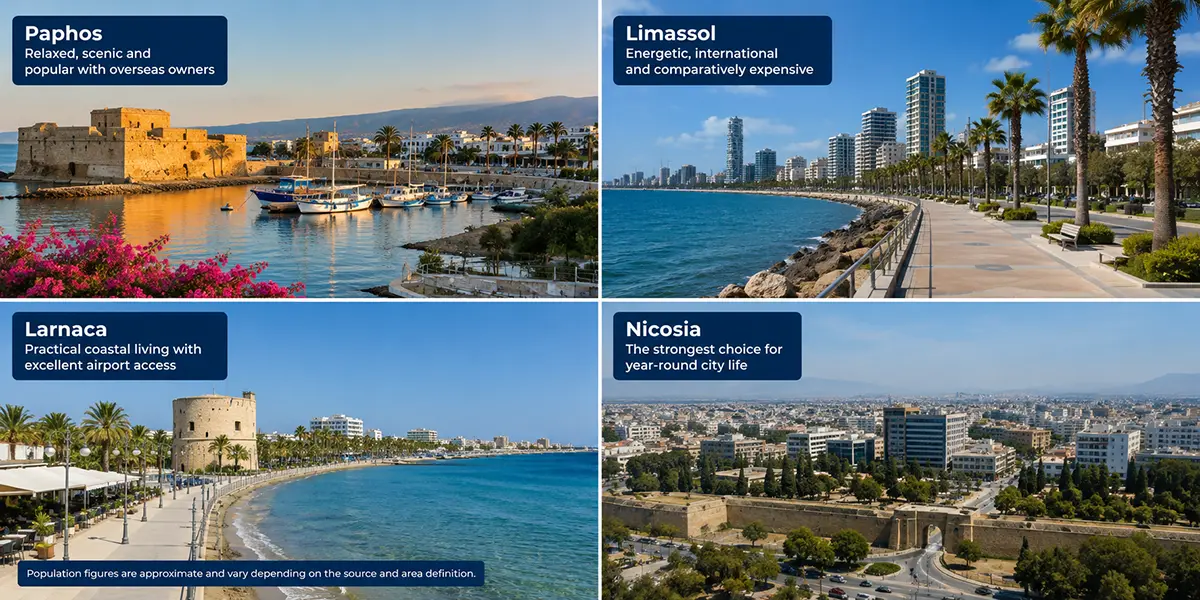
Population figures can vary depending on whether a source counts the municipality, wider urban area or whole district. The figures below should therefore be treated as useful approximations rather than exact measurements of each built-up area.
Paphos: Relaxed, scenic and popular with overseas owners
Paphos sits on the western coast of Cyprus and offers a slower, less crowded lifestyle than Limassol or Nicosia. The wider Paphos urban area has approximately 70,000 residents, while the surrounding district includes Peyia, Coral Bay, Tala, Chloraka, Kissonerga, Konia, Mesogi and Polis Chrysochous.
The city is divided broadly between Kato Paphos, around the harbour and tourist area, and the higher commercial centre traditionally known as Ktima. Outside the city are coastal developments, hillside villages and quieter rural communities.
Paphos is particularly attractive to buyers looking for villas, outdoor space and a strong English-speaking international community. Beaches, archaeological sites and natural areas are close by, while Paphos International Airport makes travel relatively convenient.
Traffic is generally manageable compared with Limassol and Nicosia. However, roads around schools, major roundabouts and shopping areas become busier during morning and afternoon peaks. Coral Bay and the main coastal areas can also become noticeably more crowded in summer.
Some villages may appear very close to Paphos on a map but involve steep roads and regular driving. Before purchasing, test the real journey to supermarkets, hospitals, schools and the airport.
Owners planning to spend long periods abroad should also consider the practical risks of leaving a Cyprus property empty.
Limassol: Energetic, international and comparatively expensive
Limassol is Cyprus’s main commercial coastal city and the island’s second-largest urban area, with a wider population of approximately 200,000.
It offers a faster and more cosmopolitan lifestyle than Paphos or Larnaca. The city has a long seafront, a modern marina, international companies, private schools, restaurants, nightlife and a growing number of high-rise developments.
Limassol is likely to appeal to buyers who want city living combined with access to the coast. It also offers strong employment and business opportunities and is positioned between the two main international airports.
The main compromises are property prices, density and traffic. Limassol is generally one of Cyprus’s most expensive property markets, particularly near the seafront and in desirable suburbs. Congestion can become heavy during commuting hours, especially along the motorway approaches and the main roads running across the city.
Buyers considering a seafront apartment should carefully investigate road noise, future construction and parking. An impressive view does not always mean that the property will be quiet or convenient.
Larnaca: Practical coastal living with excellent airport access
The wider Larnaca urban area has a population of approximately 130,000.
Larnaca combines the atmosphere of a working Cypriot city with a relaxed coastal lifestyle. It is generally calmer than Limassol but more urban than Paphos. Larnaca International Airport is immediately outside the city, making the area particularly convenient for people who travel regularly.
The centre includes the Finikoudes seafront, traditional neighbourhoods, restaurants and facilities that remain active throughout the year. The city also has easy access to the motorway network, making journeys to Nicosia, Limassol and the eastern resorts relatively straightforward.
Traffic is moderate by Cyprus-city standards, although the airport roads, city entrances and central seafront can become busy. Parking may also be difficult in older central neighbourhoods.
Nearby areas such as Oroklini, Livadia, Pyla and Dhekelia Road each offer a different lifestyle. Some feel suburban, while others have a stronger holiday-resort atmosphere. Buyers should check which local services remain open during winter.
Nicosia: The strongest choice for year-round city life
Nicosia is the inland capital and Cyprus’s largest urban centre, with a population of roughly 270,000 in the government-controlled urban area.
Unlike the coastal cities, Nicosia is not primarily built around tourism. It is the country’s administrative, financial, educational and professional centre. It offers a wide selection of offices, universities, hospitals, shops, restaurants and year-round employment.
Nicosia may be the best choice for buyers who intend to live and work permanently in Cyprus. Its established suburbs include Strovolos, Engomi, Aglandjia and Lakatamia, while the historic walled centre provides a very different urban atmosphere.
The main disadvantages are the absence of a beach, hotter inland summers and heavier commuter traffic. A journey that looks short on a map can take considerably longer during the morning and afternoon rush hours.
Famagusta district: Excellent beaches but greater seasonality
The government-controlled part of Famagusta district includes Ayia Napa, Protaras, Paralimni, Kapparis and several surrounding villages. The district has a population of approximately 54,000.
This region contains some of Cyprus’s best-known sandy beaches and clearest water. Ayia Napa is famous for tourism and nightlife, while Protaras generally has a more family-oriented atmosphere. Paralimni operates more like a permanent local town, with shops, schools and services that continue throughout the year.
The area can be an excellent choice for holiday homes and coastal living, but seasonality must be taken seriously. A street that is busy and lively in July may become extremely quiet in January.
Anyone planning to live there permanently should visit during winter and check which supermarkets, restaurants, medical facilities and public transport services remain available.
Property in the northern part of Cyprus involves separate and potentially serious legal issues. Buyers should obtain specialist independent legal advice before considering any purchase in that area.
Polis, Troodos and the villages: Space, peace and traditional character
Not every buyer wants to live in a city. Polis Chrysochous, the Akamas region, the Troodos mountains and Cyprus’s rural villages can provide cleaner air, attractive views, traditional architecture and more space for the money.
The trade-off is convenience.
A rural home may require more driving, greater garden maintenance and longer journeys to hospitals, airports and large supermarkets. Older stone houses may also require specialist maintenance to roofs, walls and drainage.
Mountain and high-altitude villages can become cold and wet in winter. Cyprus may have a warm reputation, but buyers should not assume that every part of the island remains mild throughout the year.
2. Use a Truly Independent Cyprus Lawyer
Buying a property involves much more than agreeing on a price and signing an estate agent’s reservation form.
Your lawyer should represent you alone. They should not also represent the seller or developer, and they should not be someone whose work depends mainly on referrals from the estate agent involved in the transaction.
An independent lawyer should check:
- The identity of the registered owner
- The title deed or registration certificate
- Mortgages, memos and other restrictions
- Planning and building permissions
- The sale contract and payment terms
- Outstanding taxes and communal charges
- Whether non-EU purchasing permission is required
The lawyer should also explain every important document before you sign it. Do not rely solely on a verbal assurance from an agent, seller or developer.
If someone is pressuring you to shorten the legal checks because another buyer is supposedly waiting, treat that as a warning. A desirable property can still carry serious legal problems.
3. Understand Exactly What the Title Deed Covers
A Cyprus title deed, formally called a certificate of registration, records ownership in the Land Register. However, simply being told that a property “has deeds” is not enough..
Your lawyer must confirm that the deed is genuine and current, that the seller is the registered owner and that the land and buildings match what you have been shown.
This is particularly important when a property has been altered. A house may contain an enclosed veranda, converted garage, additional bedroom, swimming pool or extension that does not appear correctly on the official plans.
For an apartment, check whether the parking space and storage room legally belong to the property or are merely being used by the current owner. You should also understand your share of the common areas and whether any part of the development has unresolved planning issues.
Some completed properties do not yet have a separate title deed. That does not automatically mean the purchase is impossible, but it increases the need for careful legal investigation and strong contractual protection.
Never accept a simple statement that the deeds are “coming soon” without asking your lawyer to establish why they have not yet been issued.
4. Check Mortgages, Debts and Restrictions Before Paying
A legal search can reveal whether the property is affected by a mortgage, court memo, prohibition, previous sale contract, bankruptcy issue or another restriction.
It can also reveal rights belonging to neighbouring properties or future plans that may affect the land.
Where immediate transfer of the title deed is not possible, the Contract of Sale should normally be properly prepared and deposited with the Department of Lands and Surveys. This is an important legal protection for the purchaser.
Before paying a reservation deposit, make sure the written agreement clearly explains whether the deposit is refundable and what happens if legal searches reveal a problem.
The agreement should also identify the completion date, the fixtures and furniture included in the sale and who is responsible for outstanding utility bills or communal charges.
Do not pay the entire purchase price simply because the seller requests it. Payment stages should be agreed with your independent lawyer and connected to clearly defined legal and practical milestones.
5. Arrange a Proper Property Inspection
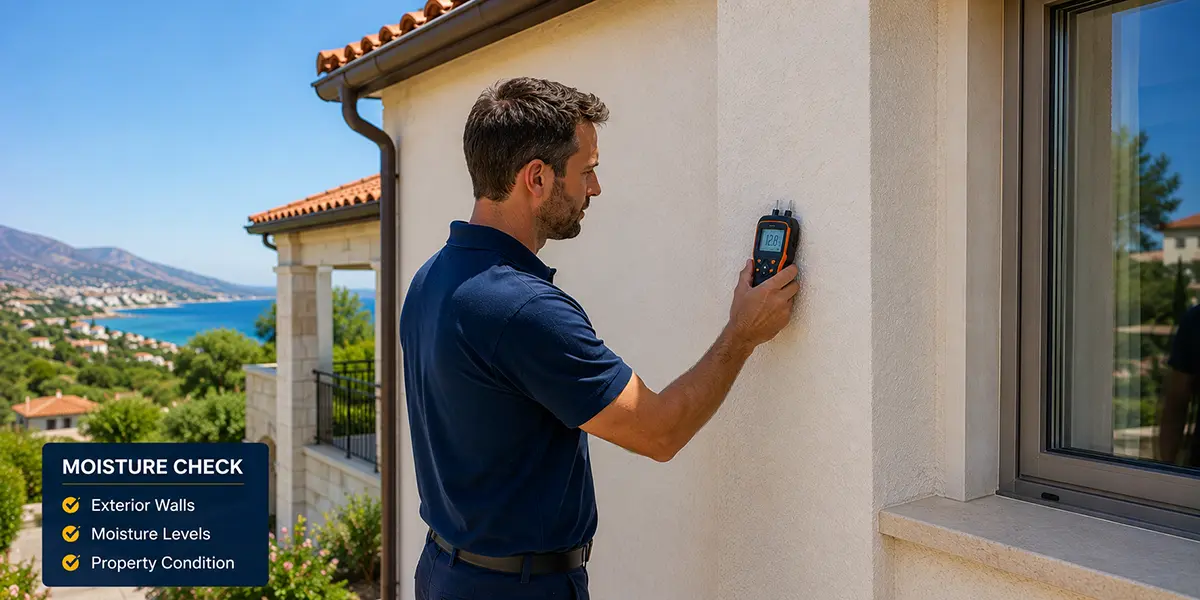
A lawyer checks the property’s legal position. A physical inspection checks the condition of the actual building.
A qualified inspector should examine:
- Important structural cracks or movement
- Roofs, balconies and waterproofing
- Damp, mould and water staining
- Plumbing and water pressure
- Electrical installations
- Drainage and sewage arrangements
- Air-conditioning systems
- Windows, doors and shutters
- Swimming-pool equipment
- Retaining walls and external drainage
- Solar water-heating equipment
Cyprus’s climate can be hard on buildings. Strong sunlight damages paint, sealants, plastic fittings and waterproof membranes. Coastal salt accelerates corrosion, while winter rain can expose drainage and damp problems that are almost invisible during summer.
Do not assume that freshly painted walls mean the property has been well maintained. Paint may be normal decoration, but it can also temporarily hide water stains or cracking.
Try to view the property more than once. A home inspected only on a sunny summer afternoon may look very different after heavy rain or several weeks of winter humidity.
A professional property inspection in Paphos can also help identify problems that may not be obvious during a normal viewing.
6. Calculate the Full Buying Cost
The advertised sale price is only part of the total amount you may spend.
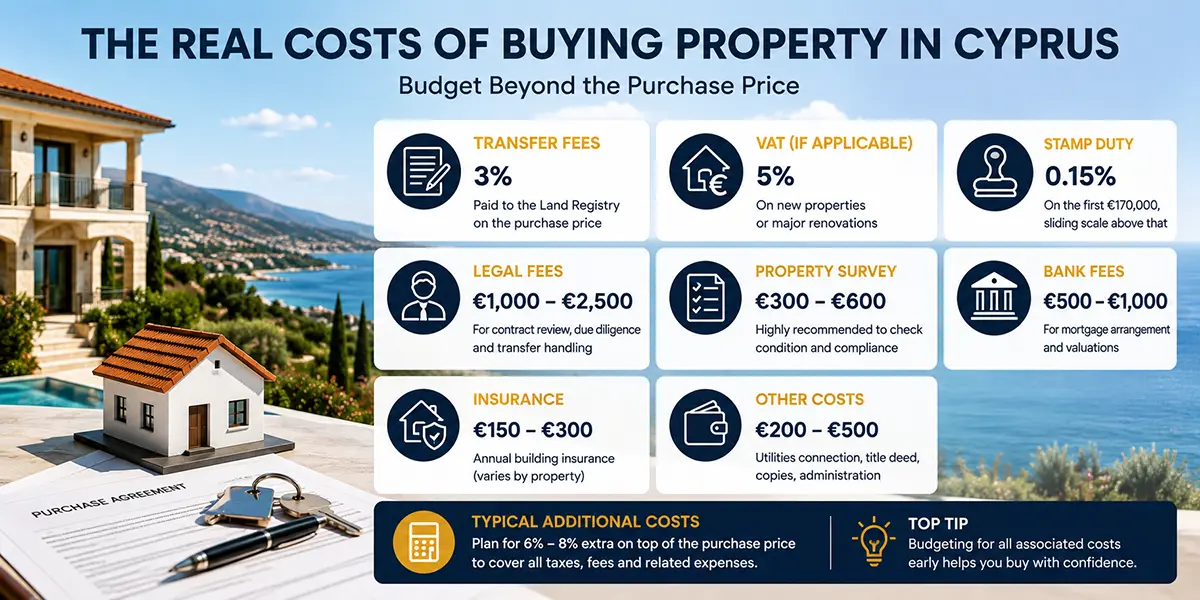
Depending on the transaction, additional expenses can include:
- Legal fees
- Property inspection or survey fees
- VAT where applicable
- Land Registry transfer fees
- Mortgage and valuation charges
- Insurance
- Utility deposits
- Communal charges
- Immediate repairs
- Furnishing and appliances
Before committing to a purchase, you can use our Cyprus Property Calculator to estimate your deposit, mortgage repayments, VAT, transfer fees and other key buying costs.
VAT
The standard Cyprus VAT rate is 19%. However, qualifying buyers purchasing or constructing a new home for use as their main and permanent residence may be eligible for a reduced 5% rate, subject to legal conditions and limits.
Do not assume that every new property qualifies. The applicable VAT treatment should be confirmed in writing for the specific transaction.
Transfer fees
Where VAT has been paid on the property transaction, Land Registry transfer fees are generally not charged.
Where VAT does not apply, transfer fees may be payable. Cyprus currently provides a reduction in the calculated transfer fee, but your lawyer should confirm the exact amount using the details of the purchase.
Stamp duty
Many older Cyprus property guides still include stamp duty as a purchasing cost.
However, Cyprus repealed its stamp-duty legislation for documents signed from 1 January 2026. Contracts signed before that date remain subject to the previous rules.
This is why buyers should be cautious about relying on old property guides or outdated online calculators.
Request a complete written estimate
Before signing anything, ask for a written breakdown showing the purchase price and all expected additional costs.
Keep a separate contingency fund for repairs, furnishing and unexpected expenses. A home advertised at €250,000 will normally cost more than €250,000 to purchase and prepare for occupation.
7. Non-EU Buyers May Need Permission to Purchase
Citizens of EU countries generally do not face the same property-acquisition permission requirement as non-EU buyers.
Non-EU citizens, including British citizens following Brexit, will normally require permission from the relevant District Administration under Cyprus law.
The application is separate from the legal purchase process and normally requires personal, financial and property information. Your lawyer should confirm whether permission is required, when the application should be submitted and what documents must accompany it.
There may also be limits on the number, size or type of properties a non-EU buyer can acquire under the standard process.
Buying property does not automatically provide permanent residence, employment rights or tax residency. These are separate legal matters and should be considered independently.
8. Research the Neighbourhood Properly
A normal property viewing may last less than an hour, but you may own the home for many years.
Visit the neighbourhood:
- In the morning
- During school and commuting hours
- In the evening
- At weekends
- During the summer
- During winter where possible
Listen for road noise, dogs, bars, construction work, delivery vehicles, church bells and aircraft.
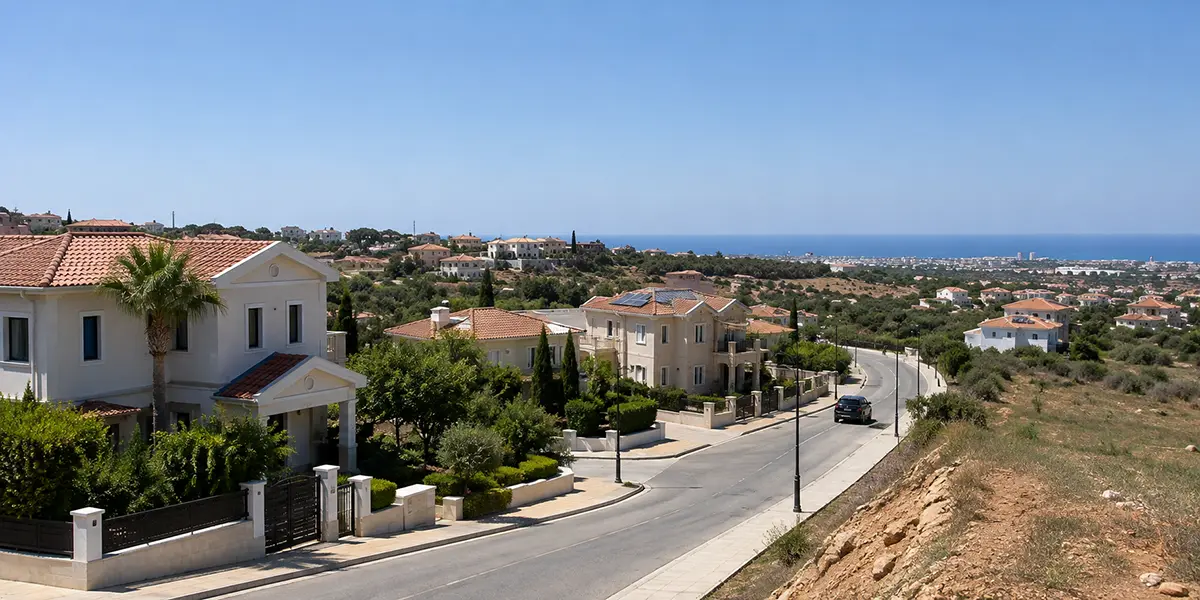
Check whether the street has sufficient parking, lighting and drainage. Look at nearby empty plots and consider whether future construction could block your view or increase traffic.
You should also establish whether the access road is publicly maintained and whether emergency vehicles can reach the property easily.
For apartments, spend time inside with the windows both open and closed. Listen for noise travelling through ceilings, walls, lifts and communal corridors.
A quiet viewing arranged during working hours may not reveal what the area is like during evenings or weekends.
9. Understand How the Climate Affects Buildings
Cyprus’s climate is one of its greatest attractions, but it also creates maintenance challenges.
Strong summer sunlight can fade paint, weaken sealants and damage plastic fittings. Rooms facing south or west may become extremely hot without shutters, external shading, insulation or suitable glazing.
Coastal homes can experience high humidity. A property that remains closed for long periods may develop musty smells, condensation and mould, particularly behind furniture and inside wardrobes.
Mould should not simply be painted over. Its cause could be poor ventilation, a plumbing leak, failed waterproofing, rising damp or water entering from a roof or balcony.
Cyprus winters are mild compared with northern Europe, but some homes can still feel cold. Properties with limited insulation or no proper heating may be uncomfortable during January and February. Mountain villages can become considerably colder.
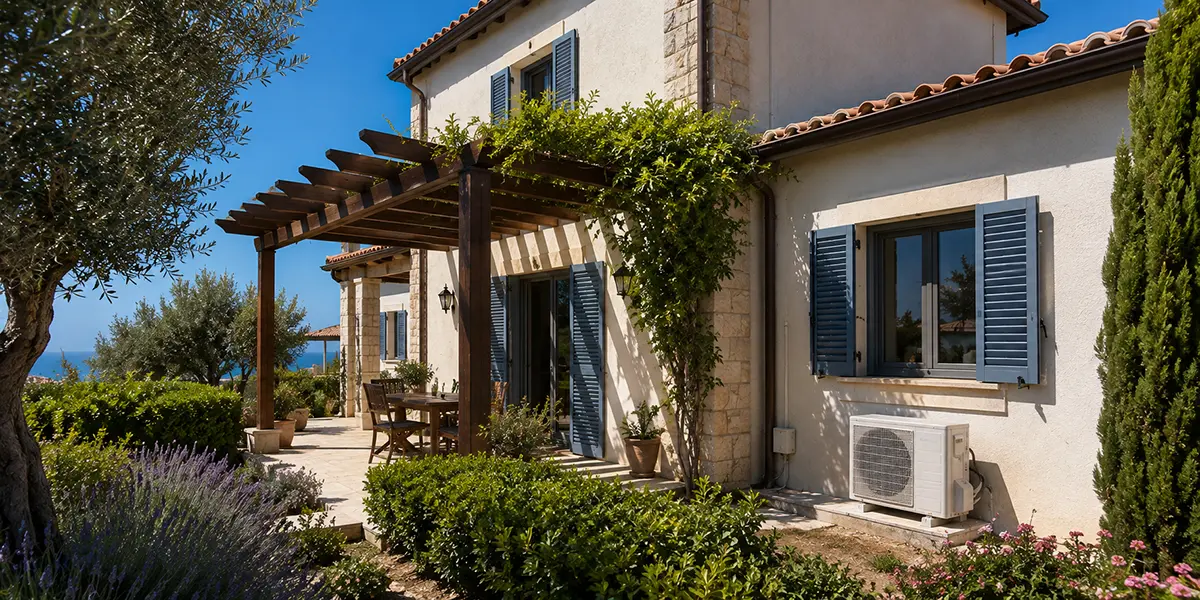
Air-conditioning systems should also be examined carefully. Replacing several old units can be expensive, while blocked drainage pipes and dirty internal components may cause leaks, odours and poor performance.
Regular air-conditioning maintenance in Cyprus can help improve performance and identify developing problems.
10. Calculate the Ongoing Running Costs
A property continues to cost money even when nobody is using it.
Your annual budget may need to include:
- Electricity and water
- Internet and security systems
- Building and contents insurance
- Communal charges
- Pool maintenance
- Garden care
- Air-conditioning servicing
- Pest control
- Exterior painting
- Repairs and replacement equipment
- Property inspections while vacant
For an apartment, ask to see recent communal accounts. Check whether the development has a reserve fund, whether other owners owe money and whether major work is planned.
Very low communal charges are not always a benefit. They may mean that insufficient money is being saved for repainting, roof repairs, lift replacement or pool maintenance.
For a villa, obtain realistic prices for the pool and garden rather than relying solely on an estate agent’s estimate. A large garden, infinity pool or extensive boundary wall may be attractive, but each adds to the long-term maintenance cost.
Set money aside for future repairs. Air-conditioning systems, pool pumps, appliances and solar-water equipment will eventually need servicing or replacement.
Owners considering a holiday home in the Paphos region may also find our detailed guide to property management costs in Paphos useful when preparing an annual budget.
11. Plan for Periods When the Property Is Empty
Many Cyprus properties remain unoccupied for weeks or months at a time.
During that period, a small problem can become a major one. A minor water leak may continue unnoticed, a failed pool pump can turn the water green and poor ventilation can encourage mould.
Insurance policies may also contain special conditions for unoccupied properties. These may require periodic checks, secure locks, water shut-off procedures or particular heating and ventilation arrangements.
Read the policy wording carefully rather than relying on a verbal explanation.
For more detail, see this guide to vacant property insurance in Cyprus.
You should know who holds the keys, who can enter during an emergency and who is authorised to arrange essential repairs.
Leaving the keys with a neighbour may be enough for occasional help, but consider whether that person is genuinely available and willing to deal with leaks, alarms, tradespeople or storm damage.
Owners who live overseas may find that professional property management in Paphos provides a clearer and more reliable system.
12. Do Not Buy Under Pressure
Cyprus has many excellent properties, but no home should be purchased simply because somebody claims another buyer is about to take it.
Pressure can cause buyers to overlook serious issues.
Before committing:
- View several comparable properties.
- Visit your preferred property more than once.
- Obtain independent legal advice.
- Arrange a physical inspection.
- Calculate the complete purchasing cost.
- Prepare a realistic annual budget.
- Read every document carefully.
- Keep important promises in writing.
Be especially careful with guaranteed-rental claims. Ask who provides the guarantee, how long it lasts, what expenses will be deducted and what happens if the guaranteeing company stops trading.
The best property is not necessarily the one with the most impressive photographs. It is the one that suits your budget, intended use and real daily lifestyle.

Final Thoughts on Buying Property in Cyprus
Buying property in Cyprus can be deeply rewarding. The island offers attractive coastal cities, traditional villages, a warm climate and a lifestyle that continues to attract permanent residents, retirees and holiday-home owners.
The safest purchases are rarely the quickest ones.
Choose your location according to the life you will actually lead. Use an independent lawyer. Verify ownership, title deeds, permissions and debts. Inspect the building properly and calculate what it will cost to purchase and maintain.
A responsible seller should be able to provide clear answers and supporting documents. When important information remains vague, treat that as a warning rather than a minor inconvenience.
Frequently Asked Questions About Buying Property in Cyprus
Can a British citizen buy property in Cyprus?
Yes. British citizens can buy property in Cyprus. However, following Brexit, they normally fall within the rules applying to non-EU nationals and may require permission from the relevant District Administration.
This permission is separate from residency or immigration status.
Do I need a Cyprus lawyer when buying property?
You should use an independent Cyprus lawyer who represents only you.
The lawyer should check ownership, mortgages, title deeds, permissions, restrictions and the sale contract. Avoid using a lawyer who is also acting for the seller or developer.
Is VAT payable on every Cyprus property purchase?
No.
VAT commonly applies to qualifying new properties, while resale properties are generally treated differently. Some buyers purchasing a new property as their main and permanent residence may qualify for a reduced VAT rate, subject to conditions.
Your lawyer or tax adviser should confirm the treatment of the specific property.
Is it safe to buy without a separate title deed?
It can sometimes be possible, particularly in a newer development, but it requires additional legal checks.
Your lawyer should establish why the deed has not been issued, whether all permissions exist, whether the land is mortgaged and how the sale contract will protect you.
Do not rely only on an assurance that the deed will be issued soon.
Which part of Cyprus is best for a holiday home?
There is no single best area.
Paphos suits buyers seeking a relaxed international community and lower-density coastal lifestyle. Limassol offers a busier and more expensive city environment.
Larnaca provides practical coastal living and excellent airport access. Famagusta district offers outstanding beaches but is more seasonal.
Visit your preferred location during both summer and winter before deciding.
Related Property Guides
If you’re planning to leave your property empty, calculate ongoing ownership costs or understand insurance requirements, these guides may also help.
Buying or Owning a Property in Paphos?
Lonely Homes Cyprus provides independent property inspections, key holding and ongoing property management for overseas owners across Paphos.