- Our Services
Air-Conditioning Maintenance in Cyprus: How Often Should You Service Your AC?
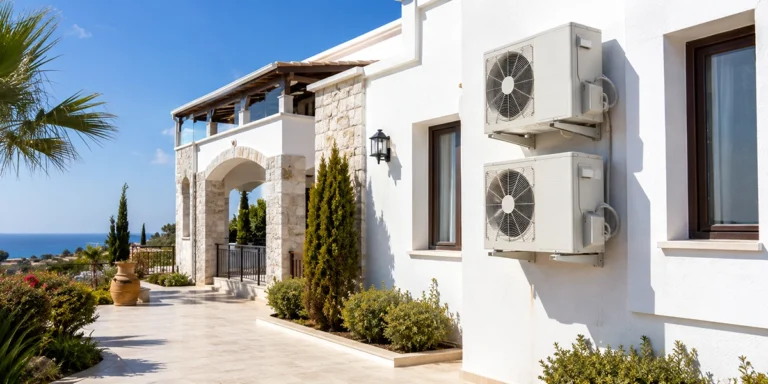
Air conditioning is essential for most homes in Cyprus. During the hottest months, units often run for many hours each day, while dust, humidity and long periods without use can place extra strain on the system.
Regular maintenance helps your air-conditioning units cool properly, use less electricity and avoid unexpected breakdowns when you need them most.
For overseas property owners, AC maintenance is especially important. A unit may appear to be working normally when you leave Cyprus but develop a blocked drain, unpleasant smell or cooling problem while the property is empty.
This guide explains how often air-conditioning units should be serviced in Cyprus, what a professional service should include and which warning signs should never be ignored.
How Often Should Air Conditioning Be Serviced in Cyprus?
For most residential properties in Cyprus, air-conditioning units should be professionally serviced at least once a year.
The best time is usually before the main summer season, when the units are about to begin working much harder.
Some properties may need servicing more frequently, including:
- Holiday villas with regular guest changeovers
- Properties where air conditioning runs daily
- Homes close to busy roads, building sites or dusty areas
- Coastal properties exposed to salt and humidity
- Units used for both summer cooling and winter heating
- Homes that have remained empty for several months
For holiday rentals or heavily used properties, checking the units every six months may be more suitable.
The correct schedule depends on the age of the equipment, how frequently it is used and the condition of the property.
Why Cyprus Air-Conditioning Units Need Regular Maintenance
Cyprus has conditions that can be demanding on air-conditioning systems.
During summer, units may run continuously for long periods. Dust and dirt can collect inside filters and internal components, while humidity can encourage mould, odours and blocked drainage pipes.
Outdoor compressor units are also exposed to heat, dust, insects, leaves and sometimes salt air.
Without regular attention, a unit may continue running while becoming less efficient. This means it can take longer to cool the room and use more electricity in the process.
Small problems can also develop into more expensive faults when they are left untreated.
What Does a Professional Air-Conditioning Service Include?
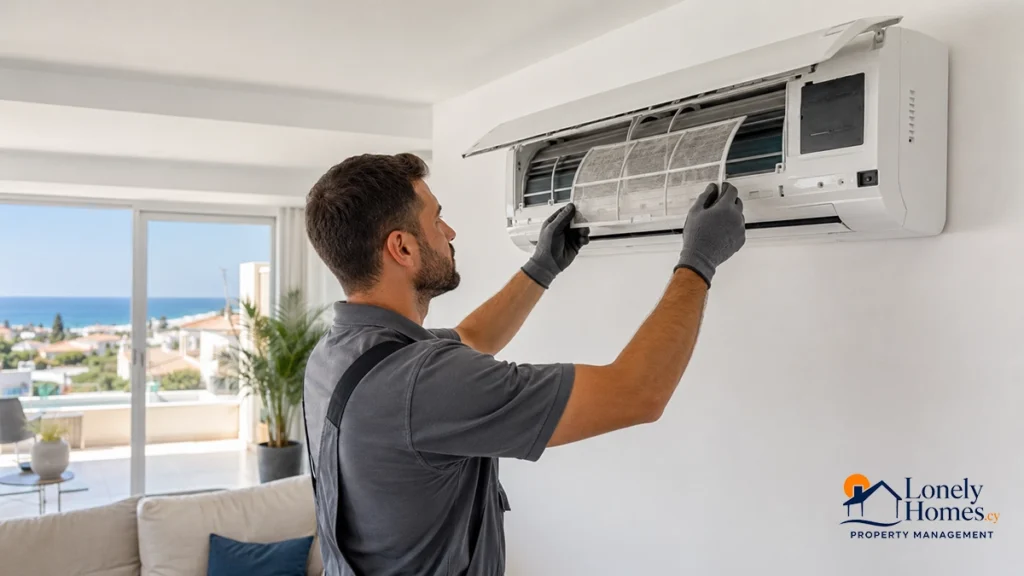
A proper air-conditioning service involves more than quickly washing the removable filters.
The technician should inspect the complete system and check that it is operating safely and correctly.
A professional service will normally include the following areas.
Cleaning the Filters
Filters collect dust, hair and airborne particles.
When they become blocked, airflow is restricted and the unit must work harder to cool the room.
Filters should be cleaned regularly between professional services, especially during periods of heavy use.
Cleaning the Indoor Unit
Dust and dirt can collect inside the indoor unit, including around the evaporator coil and fan.
This build-up may reduce cooling performance and create unpleasant smells when the unit is switched on.
A deeper clean may be necessary when mould, heavy dirt or persistent odours are present.
Checking the Drainage System
Air-conditioning units produce condensation while operating.
This water should flow safely through a drainage pipe. If the pipe becomes blocked, water may leak from the indoor unit and damage walls, furniture, floors or electrical equipment.
Drainage problems are one of the most common AC issues found in Cyprus properties.
Checking Cooling Performance
The technician should confirm that the unit is producing cold air properly and reaching the selected temperature.
Weak cooling may be caused by dirty components, restricted airflow, low refrigerant levels or a mechanical fault.
Inspecting the Outdoor Compressor
The outdoor unit should be checked for dirt, damage, blocked airflow and unusual noise.
It should have enough clear space around it to release heat efficiently.
Checking Electrical Connections
Loose or damaged electrical connections can affect performance and may become a safety concern.
The technician should inspect accessible wiring, connections and operating controls.
Testing the Remote Control and Settings
The remote control should respond correctly, and the temperature, fan speed and operating modes should work as expected.
This is particularly important before guests or property owners arrive.
Cleaning AC Filters Is Not the Same as a Full Service
Cleaning the filters is useful and should be done regularly, but it does not replace professional servicing.
The filters are only one part of the system.
A unit may have clean filters while still suffering from:
- A blocked drainage pipe
- Dirt inside the fan or coil
- Weak cooling performance
- An electrical problem
- A refrigerant leak
- Damage to the outdoor compressor
- Mould or bacteria inside the unit
Filter cleaning is basic maintenance. A full service checks the overall condition and performance of the system.
Signs Your Air Conditioner Needs Servicing
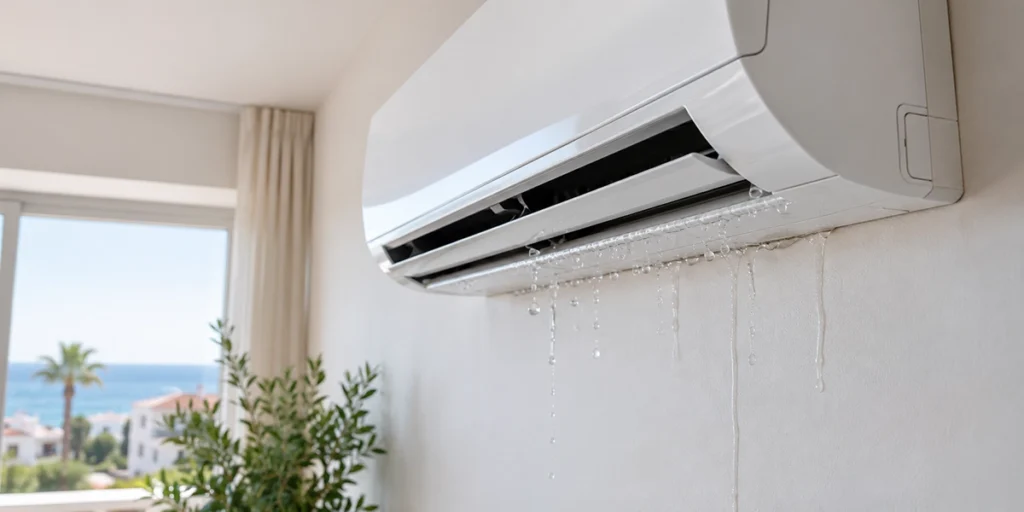
Air-conditioning problems usually give some warning before the unit completely stops working.
Arrange an inspection when you notice any of the following.
Weak or Uneven Cooling
If the room takes much longer to cool, or the air coming from the unit is not very cold, the system may need cleaning or further inspection.
Water Leaking From the Indoor Unit
Water dripping down the wall usually points to a drainage or condensation problem.
The unit should be switched off until the cause has been checked, particularly when water is close to electrical sockets or equipment.
Bad or Musty Smells
A damp or unpleasant smell may be caused by mould, moisture or dirt inside the unit.
Simply spraying air freshener will not solve the source of the problem.
Unusual Noises
Rattling, grinding, clicking or buzzing noises should not be ignored.
Some noises may come from loose parts, fan problems or the outdoor compressor.
Higher Electricity Use
A sudden increase in electricity consumption can sometimes indicate that the unit is working harder than it should.
Dirty filters, blocked airflow and poor cooling performance can all reduce efficiency.
The Unit Switches Off Unexpectedly
If the air conditioner repeatedly stops, displays an error code or trips the electrical supply, it needs professional attention.
Ice Forming on the Unit
Ice on the indoor or outdoor components may be connected to poor airflow, dirty parts or refrigerant problems.
Switch the unit off and arrange an inspection.
Problems Caused by Neglected Air Conditioning
Ignoring AC maintenance can create problems beyond an uncomfortable room.
Water Damage
A blocked drain can cause water to leak into the property.
When a home is empty, the leak may continue unnoticed and damage paintwork, plaster, furniture or flooring.
Poor Indoor Air Quality
Dust, mould and moisture inside an air-conditioning unit may produce unpleasant smells and circulate particles around the room.
Increased Electricity Consumption
A dirty or poorly maintained unit usually has to work harder to reach the required temperature.
Reduced Cooling Performance
Neglected units may struggle during the hottest part of summer, exactly when reliable cooling is most important.
More Expensive Repairs
A minor issue is often cheaper to deal with early.
Leaving warning signs untreated can lead to larger mechanical or electrical faults.
Shorter Equipment Life
Regular care can help reduce unnecessary strain on the system and keep the unit operating properly for longer.
When Is the Best Time to Service Your AC in Cyprus?
The ideal time is usually during spring, before the strongest summer heat arrives.
Servicing units between March and May allows time to find and repair problems before they become urgent.
Technicians can also become much busier during summer, especially when temperatures rise and breakdowns increase.
For properties used as holiday rentals, servicing should be arranged before the main guest season begins.
Owners who visit Cyprus during summer should have every unit tested before arrival, particularly when the home has been empty during winter.
Air-Conditioning Maintenance for Empty Properties
Air-conditioning maintenance should form part of a wider plan for protecting your home while it is unoccupied, as explained in our complete guide to leaving a Cyprus property empty.
An empty property can create additional AC risks.
When units are not used for several months, dust may collect, batteries in remote controls may fail and drainage pipes may become blocked by dirt or insects.
A unit should not be assumed to be working simply because it operated normally during the owner’s last visit.
Before the property is occupied again, each unit should be switched on and checked for:
- Cold airflow
- Water leaks
- Error codes
- Strange smells
- Unusual noises
- Correct remote-control operation
- Proper drainage
Testing the system in advance gives enough time to arrange repairs without disrupting the owner’s visit or a guest booking.
AC Maintenance for Holiday Villas and Guest Changeovers
Air conditioning is one of the most important facilities in a Cyprus holiday property.
Guests arriving during summer expect every unit to work properly.
A failed bedroom unit can quickly lead to complaints, poor reviews and emergency callouts.
During property preparation and changeovers, it is sensible to confirm that:
- Every indoor unit switches on
- Each remote control is present and working
- Batteries have sufficient power
- Cold air is being produced
- No water is leaking
- Filters are reasonably clean
- There are no strong smells or unusual noises
Professional servicing should also be scheduled regularly rather than waiting for a guest to report a problem.
Should Air Conditioning Be Left Running in an Empty Cyprus Property?
Leaving air conditioning running continuously in an empty property is rarely necessary and may waste electricity.
However, some homes can suffer from humidity, condensation or dampness, especially during certain times of year.
The best solution depends on the property, ventilation, location and humidity levels.
In some cases, limited use of an air-conditioning unit on a suitable setting may help. In others, ventilation, dehumidifiers or scheduled property visits may be more appropriate.
The system should not be left running unattended when there is already a known drainage, electrical or cooling problem.
A tailored property-care plan can help determine the most suitable approach for the home.
What Temperature Should You Set Your Air Conditioner To?
Setting the temperature extremely low does not cool the room instantly.
It usually makes the unit run for longer and may increase electricity use.
A setting of approximately 24°C to 26°C is comfortable for many people during summer, although the best temperature will depend on the room, humidity and personal preference.
Keeping doors and windows closed while the unit is operating will also help it cool the room more efficiently.
Curtains, blinds and shutters can reduce direct sunlight and lower the heat entering the property.
How Property Owners Can Help Keep Their AC Units in Good Condition
Between professional services, property owners can take a few simple steps.
Clean the removable filters regularly, keep the area around the indoor unit clear and make sure the outdoor compressor is not blocked by plants, storage items or debris.
Do not ignore water leaks, electrical trips or unusual noises.
When the property will remain empty for an extended period, arrange for the units to be tested before your return.
Keep a record of service dates, faults and repairs so that recurring problems can be identified.
Air-Conditioning Maintenance Costs in Cyprus
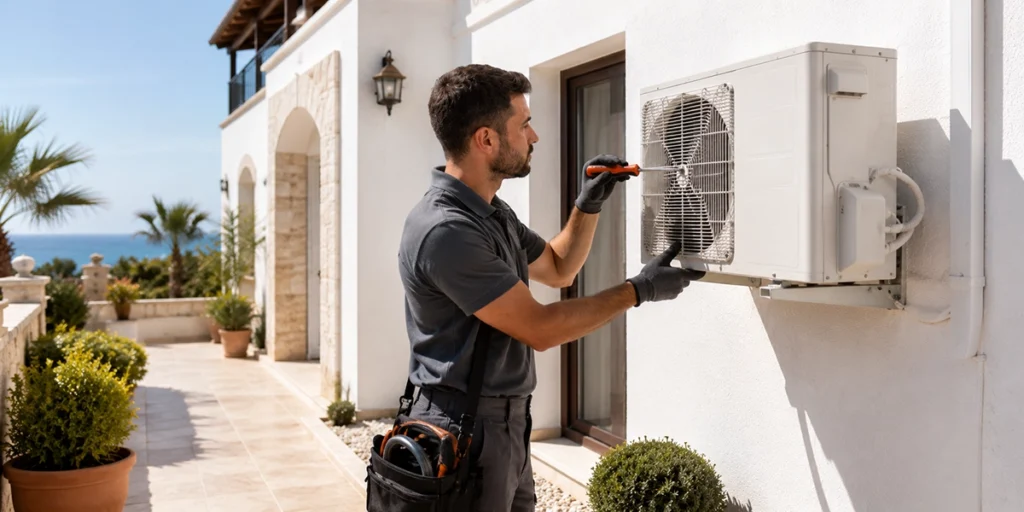
The cost of servicing depends on several factors, including:
- The number of indoor units
- The condition of each unit
- Accessibility
- Whether deep cleaning is required
- The age and type of equipment
- Whether the outdoor compressor needs cleaning
- Any faults discovered during inspection
A standard service and a repair are not the same.
If a technician finds a damaged component, refrigerant issue or electrical fault, the necessary repair should be quoted separately.
Property owners should receive clear information about any additional work before it is carried out.
How Lonely Homes Cyprus Can Help
Lonely Homes Cyprus helps overseas property owners keep their air-conditioning systems ready and working while they are away.
We can arrange servicing, provide access to trusted technicians, test units, report visible problems and coordinate approved repairs.
Where appropriate, photographs and updates can be provided so you know what work has been completed.
Our property-care plans can also be tailored to your home. Services can be added or removed depending on the property’s size, condition and specific requirements.
We cover properties throughout Paphos, Peyia and Polis Chrysochous.
Frequently Asked Questions
How often should AC filters be cleaned?
During periods of regular use, filters should be checked every few weeks and cleaned when dust becomes visible.
Properties with pets, heavy dust or frequent guest use may need more regular cleaning.
How often should a full AC service be carried out?
For most homes in Cyprus, at least once a year is sensible. Heavily used units and holiday properties may require more frequent attention.
Why is water dripping from my air conditioner?
The most common cause is a blocked drainage pipe, although other problems are possible.
Switch off the unit and arrange an inspection before water causes further damage.
Why does my air conditioner smell?
Musty smells are often connected to moisture, mould or dirt inside the unit.
A deeper professional clean may be needed.
Can low refrigerant simply be topped up?
Refrigerant should not normally disappear from a sealed system.
When the level is low, the technician should check whether a leak or another fault is present.
Should all units be tested before guests arrive?
Yes. Every indoor unit, remote control and drainage system should be checked before the property is occupied.
Final Thoughts
Regular air-conditioning maintenance is one of the simplest ways to protect your comfort, your property and your equipment in Cyprus.
A yearly service can help identify blocked drains, poor cooling, dirt, smells and developing faults before they become urgent.
For overseas homeowners, arranging maintenance before arrival offers valuable peace of mind. It also reduces the chance of spending the first days of your visit waiting for an emergency technician.
For holiday properties, reliable air conditioning is essential for guest comfort and good reviews.
Do not wait until a unit stops working during the hottest week of the year. Plan servicing in advance and deal with small problems early.
Need Help With Air-Conditioning Maintenance in Cyprus?
Let Lonely Homes arrange air-conditioning servicing, testing and approved repairs to keep your Cyprus property cool, comfortable and ready to use.